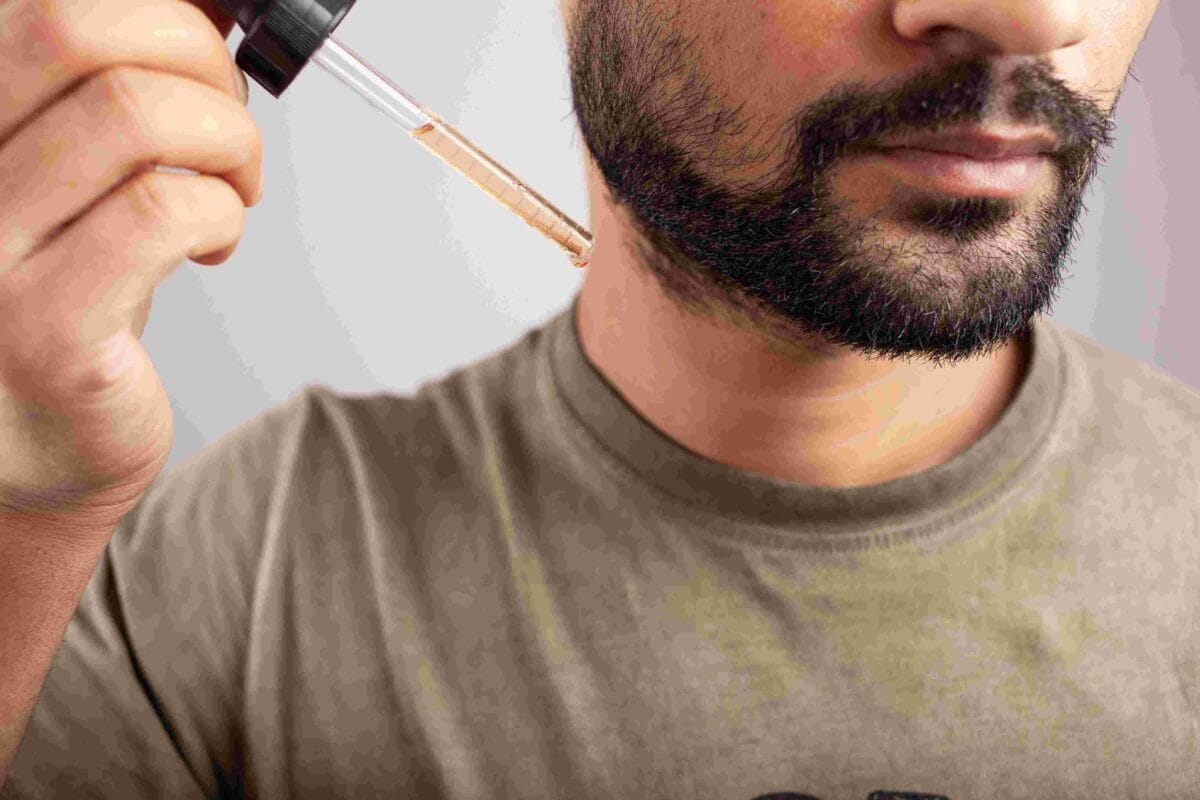
Over the past few years, a growing number of men have turned to minoxidil — a medication traditionally used for scalp hair loss — in pursuit of a fuller, thicker beard. Online forums, social media communities, and YouTube channels are filled with before-and-after photos showing seemingly impressive transformations. But does the science actually support using minoxidil for beard growth, and is it safe to apply to your face?
In this guide, we break down what the evidence shows, how minoxidil might work on facial hair, how to use it safely if you choose to try it, and what kind of results you can realistically expect.
What Is Minoxidil?
Minoxidil is a topical medication that was originally developed in the 1970s as an oral treatment for high blood pressure. Researchers noticed an interesting side effect: patients taking minoxidil began growing hair in unexpected places. This led to the development of topical minoxidil as a hair loss treatment, and it has been licensed in the UK for the treatment of androgenetic alopecia (male and female pattern hair loss) since the late 1980s.
Today, minoxidil is available over the counter in the UK as a topical solution (typically 5%) or foam. It remains one of the most widely used hair loss treatments in the world. If you are looking for a comprehensive overview of how to apply it for scalp hair loss, our complete guide to using minoxidil covers everything you need to know.
Why Are Men Using Minoxidil for Beard Growth?
Beard thickness and coverage are largely determined by genetics. Some men naturally develop full, dense facial hair during their late teens and early twenties, while others find they have patchy areas, thin coverage, or slow growth well into adulthood. For men who feel their beard is not as full as they would like, there are very few proven treatments available — which is precisely why minoxidil has attracted so much interest.
The logic is straightforward: if minoxidil can stimulate hair growth on the scalp, could it do the same on the face? This reasoning, combined with thousands of anecdotal reports online showing positive results, has turned minoxidil into a popular off-label remedy for beard enhancement.
What Does the Evidence Say?
It is important to be upfront about the current state of the evidence. There is very limited clinical research specifically investigating minoxidil for beard growth. Most of what we know comes from anecdotal reports, small studies, and extrapolation from what we understand about how minoxidil works on the scalp.
The Thai Clinical Trial
The most frequently cited study was conducted in Thailand and published in the Journal of Dermatology in 2016. This was a randomised, double-blind, placebo-controlled trial involving 48 men aged 18 to 40 who applied either 3% minoxidil or a placebo lotion to their chin area twice daily for 16 weeks.
The results were encouraging. The minoxidil group showed a statistically significant increase in hair count compared to the placebo group. Self-assessment scores also improved, with participants in the minoxidil group reporting greater satisfaction with their beard growth. Side effects were mild and mostly limited to skin irritation and itching.
While this study provides some clinical support, it has limitations. The sample size was small, the trial duration was relatively short, and it used a 3% concentration rather than the 5% solution most men use in practice. More robust, larger-scale trials are needed before definitive conclusions can be drawn.
Anecdotal Evidence
Beyond formal research, there is a substantial body of anecdotal evidence from online communities such as Reddit’s r/Minoxbeards, which has hundreds of thousands of members sharing their experiences. Many users report noticeable improvements in beard density and coverage after several months of consistent use, often posting photographic evidence of their progress.
While anecdotal evidence should always be interpreted cautiously — people who see results are more likely to post about them than those who do not — the sheer volume of positive reports suggests that minoxidil does have a genuine effect on facial hair growth for many men.
How Would Minoxidil Work for Facial Hair?
The exact mechanism by which minoxidil promotes hair growth is not completely understood, even for scalp use. However, several biological processes are thought to be involved, and these same mechanisms could plausibly apply to facial hair.
Vasodilation and Increased Blood Flow
Minoxidil is a potent vasodilator, meaning it widens blood vessels and increases blood flow to the area where it is applied. This improved circulation delivers more oxygen and nutrients to hair follicles, potentially stimulating dormant or miniaturised follicles to enter an active growth phase.
Prolonging the Anagen Phase
Hair growth occurs in cycles, and the anagen phase is the active growth period. Minoxidil appears to prolong this phase, allowing hairs to grow longer and thicker before entering the resting and shedding phases. On the face, this could mean that fine, barely visible vellus hairs are encouraged to mature into thicker, darker terminal hairs.
Vellus to Terminal Hair Conversion
This is perhaps the most relevant mechanism for beard growth. Many men have vellus hairs (fine, light, barely visible hairs) in areas where they would like fuller beard coverage. Minoxidil may promote the conversion of these vellus hairs into terminal hairs — the thick, pigmented hairs that make up a visible beard.
Important: This Is Off-Label Use
It is essential to understand that minoxidil is not licensed or approved for beard growth in the UK or anywhere else. It is only approved by the MHRA for the treatment of androgenetic alopecia on the scalp. Using it on the face for beard enhancement constitutes off-label use.
This does not mean it is necessarily dangerous — many medications are used safely off-label under medical guidance — but it does mean that there is no official dosing recommendation, safety data, or regulatory oversight specific to this application. If you are considering trying minoxidil for beard growth, we strongly recommend discussing it with a healthcare professional first.
How to Use Minoxidil on the Face Safely
If you decide to proceed, here are practical guidelines for using minoxidil on facial skin as safely as possible.
Choose the Right Formulation
Most men opt for 5% minoxidil, which is the standard concentration used for scalp hair loss. Foam formulations tend to be better tolerated on facial skin because they typically do not contain propylene glycol, which is a common cause of skin irritation in liquid formulations.
Application Method
- Clean your face thoroughly and ensure your skin is completely dry before applying.
- Apply a thin layer to the areas where you want to see growth. You do not need to use the full 1ml dose recommended for scalp use — use just enough to cover the target area.
- Leave it on for at least four hours before washing your face. Many men apply it in the morning and evening, leaving it on overnight for the second application.
- Wash your hands thoroughly after each application to avoid transferring the medication to other areas of your body or to other people.
Frequency
Most users apply minoxidil twice daily, in line with the standard dosing for scalp use. Some men use it once daily and still report results, though this may take longer. Consistency is far more important than frequency — missing applications regularly will significantly reduce the likelihood of seeing results.
Moisturise
Minoxidil can be drying and irritating to facial skin. Apply a gentle, fragrance-free moisturiser after the minoxidil has fully absorbed (typically after four hours). This helps to minimise dryness, flaking, and irritation.
Potential Side Effects on Facial Skin
Using minoxidil on the face carries some specific risks and side effects that differ from scalp application.
Skin Irritation and Dryness
This is the most common side effect. The facial skin is thinner and more sensitive than the scalp, making irritation, redness, flaking, and dryness more likely. Using a foam formulation and moisturising regularly can help mitigate this.
Unwanted Hair Growth
Minoxidil can be absorbed into the bloodstream through the skin, which occasionally leads to hair growth in unwanted areas, such as the forehead, cheeks (beyond the intended beard area), or even the eyelids. Be precise with your application and wash your hands thoroughly afterwards.
Increased Heart Rate or Dizziness
Because minoxidil was originally a blood pressure medication, there is a theoretical risk of systemic cardiovascular effects, particularly if it is applied to large areas of facial skin or used in excessive quantities. Stick to recommended amounts and discontinue use if you experience heart palpitations, dizziness, or lightheadedness.
Acne or Breakouts
Some men report increased acne or breakouts in the application area, particularly with liquid formulations. Switching to foam or adjusting your skincare routine can often resolve this issue.
Contact with Partners, Children, or Pets
Minoxidil is toxic to cats and potentially harmful to children and pregnant women. If you have a partner, children, or pets, take extra care to avoid skin-to-skin transfer. Wait until the product has fully absorbed and dried before close contact, and always wash your hands after application.
Results Timeline: What to Expect
Patience is absolutely essential when using minoxidil for beard growth. Results are not immediate, and the timeline can vary significantly between individuals.
Weeks 1-4: The Early Stage
Most men will not see any visible change during the first month. Some may notice an increase in vellus hair (fine, light peach fuzz) in the application area. A small number of users experience initial shedding, where existing hairs fall out before new growth begins. This is normal and should not cause alarm.
Months 2-3: Vellus Hair Emergence
By the second and third months, many users begin to notice a visible increase in vellus hairs across the application area. These hairs will be fine and light-coloured, and your beard may not look noticeably different to others at this stage.
Months 4-6: Transitional Growth
This is where many men begin to see meaningful changes. Some vellus hairs start transitioning into intermediate hairs — slightly thicker and darker than before, though not yet fully terminal. Patchy areas may start to fill in.
Months 6-12: Terminal Hair Development
Consistent users often report their most significant results during this period. Intermediate hairs continue to mature into terminal hairs, and the overall beard density improves noticeably. Coverage in previously patchy areas may become more uniform.
Months 12-24: Full Results
Some men continue to see gradual improvement beyond the one-year mark. The key question at this stage is whether new hairs will remain once minoxidil is discontinued.
Will the Results Last If You Stop?
This is one of the most debated questions in the minoxidil beard community. For scalp hair loss, it is well established that stopping minoxidil leads to the loss of any hair gained through treatment. However, the situation with beard growth may be different.
Many users report that once vellus hairs have fully transitioned into terminal hairs, those hairs remain even after discontinuing minoxidil. The theory is that terminal facial hairs, once matured, are permanent in the same way that natural beard hairs are permanent. However, this has not been confirmed in clinical studies, and some men do report thinning after stopping treatment.
A common approach is to continue using minoxidil for at least one to two years, or until all new hairs have clearly transitioned to thick, dark terminal hairs, before gradually tapering off.
Combining Minoxidil with Other Approaches
Some men combine minoxidil with other strategies to maximise beard growth:
- Derma rolling (microneedling): Using a derma roller (typically 0.5mm) on the face before applying minoxidil may enhance absorption and stimulate collagen production. However, do not apply minoxidil immediately after derma rolling — wait at least 24 hours to avoid excessive irritation and absorption.
- Biotin supplementation: Biotin (vitamin B7) is often promoted for hair and nail health, though evidence for its effectiveness in men without a deficiency is limited.
- Good general health: Adequate sleep, regular exercise, a balanced diet, and managing stress all support healthy hair growth.
When to Speak to a Healthcare Professional
We recommend consulting a healthcare professional before starting minoxidil for beard growth, particularly if you:
- Have any cardiovascular conditions or take blood pressure medication
- Have sensitive skin or a history of dermatitis or eczema on your face
- Are under 18 years of age
- Experience any concerning side effects during use
If you are experiencing hair loss on your scalp alongside concerns about facial hair, it may be worth exploring clinically proven treatments for pattern hair loss. Our hair loss treatment page provides information about evidence-based options, including finasteride and minoxidil for scalp use. You can also read our guide to using minoxidil for hair loss for detailed application instructions.
For a broader understanding of how hair loss medications work, our articles on how finasteride works and the clinical evidence for finasteride may also be helpful reading.
Key Takeaways
- Minoxidil for beard growth is an off-label use that is not approved by the MHRA or any regulatory body for this purpose.
- Limited clinical evidence — one small but well-designed trial from Thailand — suggests it can increase facial hair growth. Substantial anecdotal evidence from online communities supports this.
- It likely works through the same mechanisms as scalp use: vasodilation, prolonging the anagen phase, and promoting vellus-to-terminal hair conversion.
- Results typically take four to twelve months of consistent, twice-daily application to become visible.
- Common side effects include skin dryness, irritation, and unwanted hair growth in surrounding areas. Serious cardiovascular side effects are rare but possible.
- There is some evidence that results may be permanent once hairs have fully transitioned to terminal hairs, but this is not confirmed by clinical studies.
- Always consult a healthcare professional before starting, especially if you have existing health conditions.
This article is for informational purposes only and does not constitute medical advice. Always speak to a qualified healthcare professional before starting any new treatment. Content reviewed by the Evernu clinical team.